Search
The UK vehicle leasing sector continues to demonstrate resilience, delivering further growth despite a flatlining national economy and increasing cost pressures.
The BVRLA’s latest Leasing Outlook Report shows the total leased vehicle parc has grown by 8% year on year, reaching 1.98 million vehicles and edging ever closer to the two-million mark. While this sustained growth underlines the sector’s adaptability, the association warns it is increasingly being achieved at the expense of margins - a trend expected to intensify into 2026.
Commenting on the findings, BVRLA Chief Executive Toby Poston said: “The vehicle leasing sector continues to play a vital role in driving new vehicle registrations and delivering road transport decarbonisation. But any satisfaction from these achievements is tempered by the relentless pressure of compliance costs, cash-strapped customers and rampant EV depreciation.
“Our industry is agile, resilient and innovative, but it needs to work in partnership with the Government. The faltering used EV market and the badly designed and poorly timed eVED regime proposals are two prime examples where we need an urgent policy rethink.”
As in recent reporting periods, growth continues to be driven by Business Contract Hire (BCH), which rose by 7.9% year on year, alongside Salary Sacrifice, which remains the fastest-growing part of the market. In contrast, Personal Contract Hire declined by 3.7%, reflecting ongoing pressure on household budgets.
The separation between car and van markets also persists. Car registrations increased by 12.5% year on year, while van volumes fell by 4.2% over the same period.
A consistent factor underpinning growth across the sector is the availability of suitable electric vehicles, combined with financial incentives. Where these conditions exist, demand has remained strong. Battery electric vehicles now account for 47% of the total BCH car fleet, helping to drive average emissions down to a record low of 40.2g/km.
The expanding range of electric models and new market entrants has also supported the growth of Salary Sacrifice schemes. BVRLA members report increasing participation from lower-rate taxpayers as improved choice and more competitive pricing make schemes accessible to a broader audience.
Economic pressures are also influencing customer behaviour around lease structures. While three-year agreements remain the industry benchmark, contracted mileages are falling as customers seek lower monthly payments. There is also a growing interest in longer lease terms, although this has yet to translate into a significant shift in the market.
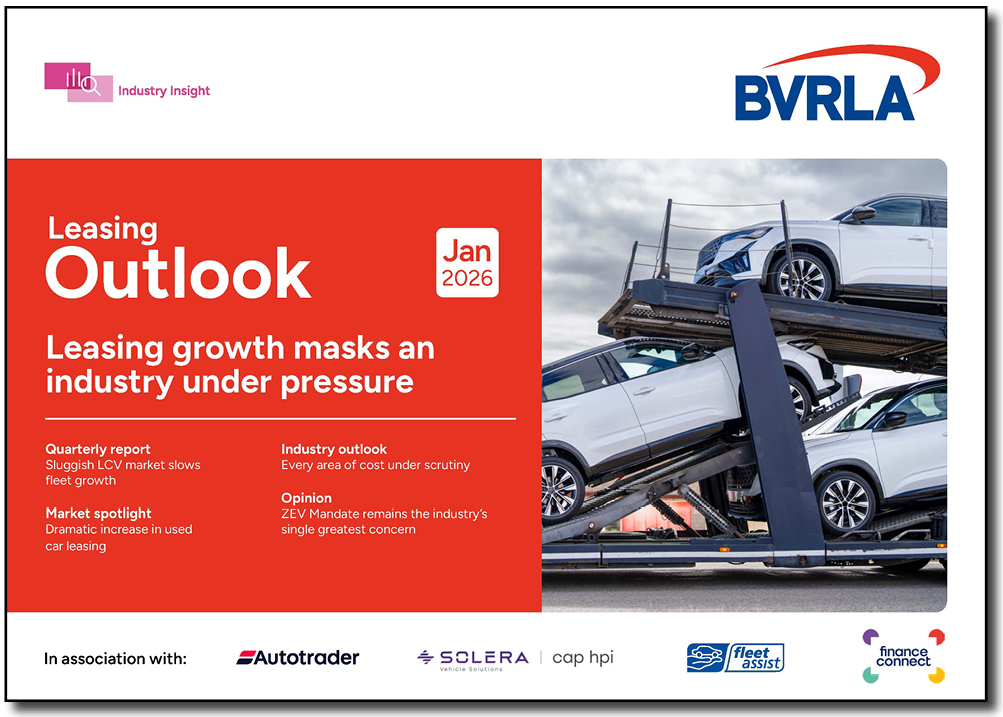
BVRLA Leasing Outlook Report – January 2026.